
BYN Guide · Business Growth
For established Kenyan brands, 2026 is a strong year to look beyond the border. Governments across the continent are investing in their digital economies: Kenya’s National AI Strategy 2025–2030, Ghana’s AI strategy launched on 24 April 2026, Zimbabwe’s 2026–2030 AI strategy and Zambia’s AI strategy all aim to grow digital adoption. Regional trade frameworks such as the East African Community and the African Continental Free Trade Area are lowering barriers too. But expanding a brand is not about running the same Facebook ad in five countries. It means earning trust market by market. This is the playbook we use, with a scorecard to choose markets, a localisation checklist, a 90-day test plan and the budget to expect.
At a glance
8 min read
Focus: brand expansion Africa
Kenya, East Africa, Ghana, Zambia, Zimbabwe
Related: Business Amplifier Bundle
Markets at a glance
| Market | Main business hubs | Currency | Common mobile money | Regional bloc |
|---|---|---|---|---|
| Uganda | Kampala, Entebbe | UGX | MTN MoMo, Airtel Money | EAC, COMESA |
| Tanzania | Dar es Salaam, Arusha, Dodoma | TZS | M-Pesa, Airtel Money, Mixx by Yas | EAC, SADC |
| Rwanda | Kigali | RWF | MTN MoMo, Airtel Money | EAC, COMESA |
| Ghana | Accra, Kumasi, Tema | GHS | MTN MoMo, Telecel Cash, AirtelTigo Money | ECOWAS |
| Zambia | Lusaka, Copperbelt (Kitwe, Ndola) | ZMW | MTN MoMo, Airtel Money | SADC, COMESA |
| Zimbabwe | Harare, Bulawayo | USD and ZiG | EcoCash | SADC, COMESA |
BYN tipKenya, Uganda, Tanzania and Rwanda share EAC trade links and, in much of the region, Swahili. That makes them the natural first step for most Kenyan brands. Ghana, Zambia and Zimbabwe suit brands with strong English-language content, B2B offers or a product that travels well.
1. Pick markets by evidence, not ambition
Score each candidate market from 1 to 5 on the five factors below, multiply by the weight, and start with the highest total. It takes an afternoon and saves months of guesswork.
| Factor | Weight | Where to find the evidence |
|---|---|---|
| Existing demand | 30% | Google Search Console and GA4 country reports, WhatsApp chats and enquiries from that country |
| Search interest | 20% | Google Trends and Keyword Planner for your service in each country |
| Payment and delivery fit | 20% | Can customers pay the way they prefer, and can you deliver or serve them? |
| Competition | 15% | Who ranks and advertises for your main keywords locally? |
| Ease of operating | 15% | Registration, tax, travel time, partners and language |
Uganda4.1
Rwanda3.8
Tanzania3.6
Zambia3.2
Ghana3.0
Zimbabwe2.6
Illustrative scores. Your ranking will differ by product, existing customers and team.
2. Localise the message, keep the brand
Keep the same logo, colours and core promise in every market so your brand compounds. Change the proof, so people feel you are already part of their market.
Local prices in the local currency, or clear USD pricing for B2B where that is normal.
A local phone or WhatsApp number, or at least a clear note on how to reach you from that country.
Local proof: case studies, testimonials and client logos from that country as soon as you have them.
Language: Swahili works across much of East Africa; Kinyarwanda and French matter in Rwanda; English with local idiom in Ghana, Zambia and Zimbabwe.
Local payment options: mobile money is the default in most of these markets. In Kenya, 65.7% of online shoppers pay with mobile money (Communications Authority survey via ITWeb Africa).
Cultural calendar: public holidays, school terms and budget cycles differ, so plan campaigns around them.
3. Borrow trust through influencers and partners
In a new market nobody knows you yet. The fastest way in is through people they already trust.
| Trust builder | How to use it | What to measure |
|---|---|---|
| Micro-influencers (2 to 4 per country) | Choose creators with real engagement in your niche, not just big follower counts | Tracked link clicks, discount codes and WhatsApp chats |
| Local partners | Co-branded content or offers with a bank, chamber of commerce or industry association | Referrals and joint event sign-ups |
| Regional business media | Expert commentary, founder interviews and data stories | Mentions, backlinks and branded search growth |
| Local reviews | Ask your first clients in each country for Google reviews | Review count and rating per location |
4. Show up where decisions are made
B2B buyers in Africa still prefer to meet people. Regional tech, AI and business summits are where partnerships start. Budget for one flagship event per quarter: exhibit, speak, or host a breakfast for 20 decision-makers. Then turn every event into content: photos, short videos, a LinkedIn article and a blog recap with the people you met tagged.
5. Build regional SEO the right way
A page per market (for example “Digital marketing for businesses in Kampala”) with genuinely local content, prices and proof, not the Kenyan page with the city name swapped.
Clear country targeting: use hreflang tags if you run language or country versions of the same pages.
Local links: earn mentions from directories, chambers and media in each country.
Google Business Profiles for any physical office or service area you genuinely operate in.
AI-ready facts: FAQs, schema and plain statements of where you operate, so AI search tools can recommend you in each market.
6. Run a 90-day market test
- Days 1 to 30, prepare: market page, local number, payment options, 2 influencer partners, Google and Meta campaigns geo-targeted to the main city only.
- Days 31 to 60, launch: ads live, influencer content out, one PR story pitched, one event or webinar for local prospects.
- Days 61 to 90, decide: compare cost per lead and close rate with Kenya. Scale the market, adjust the offer, or pause and try the next one on your scorecard.
Worked exampleSet the go/no-go rule before you start, for example: “We continue if cost per lead is within 1.5 times our Kenyan average and we close at least 3 clients in 90 days.” It stops you from spending more just because you have already spent.
7. Measure by market, not in total
Report leads, cost per lead, close rate and revenue per country every month, using separate campaigns and UTM tags for each market. Expansion that is not measured quickly becomes expensive tourism. Our guide to digital marketing strategy in Kenya explains the core metrics, and our AI and automation guide shows how to answer leads from several countries quickly.
What regional expansion costs
| Item | Per new market, per month | Notes |
|---|---|---|
| Paid media (Google and Meta) | KSh 40,000 to 120,000 | Start with the capital city only |
| Influencer collaborations | KSh 20,000 to 100,000 | Depends on creator size and deliverables |
| Content localisation | KSh 10,000 to 40,000 | Translation, local photos, market page updates |
| PR and events | Varies widely | Budget one flagship event per quarter |
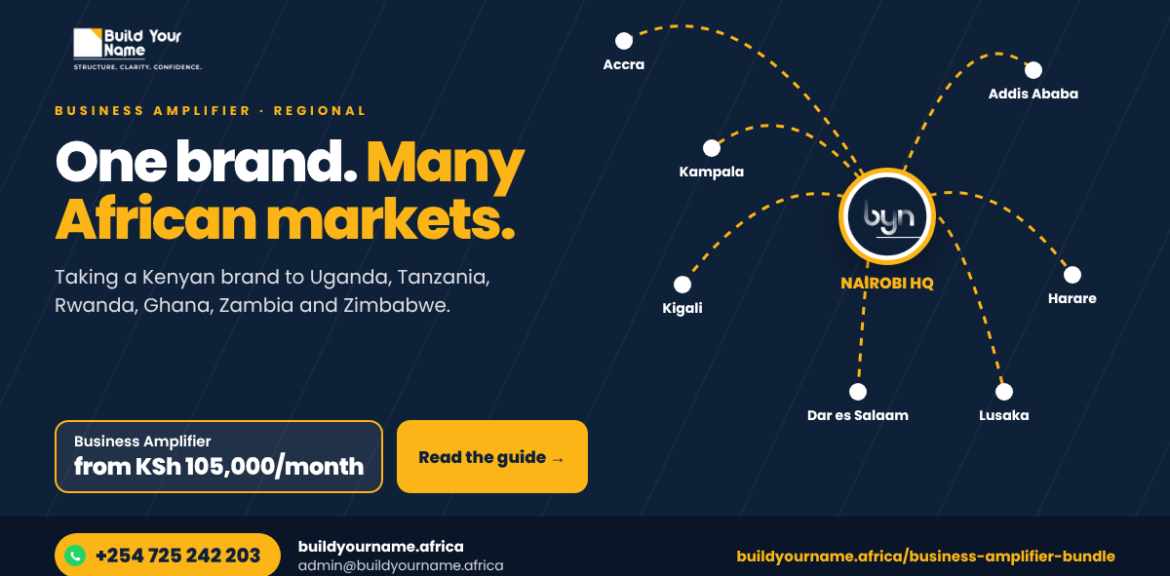
How the Business Amplifier Bundle supports expansion
| Tier | Monthly fee | Highlights |
|---|---|---|
| Basic | KSh 105,000 | 1 to 2 influencer collaborations, media planning for one campaign a month, small event support |
| Premium | KSh 185,000 | Multi-channel media across TV, radio and digital, a larger influencer network |
| Elite | KSh 320,000 | Large-scale launches and the widest influencer and media programme |
Ad and media spend is billed separately. Clients on this bundle include Ecotesco, whose marketing manager reported a 40% rise in organic traffic within months. See the Business Amplifier Bundle for details.
Explore related BYN services
Business Amplifier BundleInfluencers, media, events and digital strategy, from KSh 105,000 a month.Explore →Digital marketing servicesRegional SEO, social media and content.Explore →Google Ads managementGeo-targeted campaigns per country with clean tracking.Explore →AI and automation for SMEsAnswer leads across markets in minutes.Explore →
Frequently asked questions
Q1Which African markets should a Kenyan brand enter first?
Usually the ones where customers already find you. Uganda, Tanzania and Rwanda share EAC trade links and, in much of the region, Swahili. Ghana, Zambia and Zimbabwe suit brands with strong English-language content and B2B offers.
Q2Do I need a separate website for each country?
Not at first. One strong site with a well-built page per country is usually enough. Separate sites make sense once each market has its own team, budget and content.
Q3How much should I budget for regional expansion?
Plan management fees plus roughly KSh 70,000 to 250,000 a month per market for media, influencers and localisation. Start with one new market for 90 days, measure cost per lead, then decide.
Q4Do I need to register a company in each country?
It depends on how you sell. Many service businesses start by serving clients remotely, but invoicing, tax and hiring locally usually require registration. Take local legal and tax advice before you scale.
Q5How do I price for different currencies?
Publish prices in the local currency for consumer products. For B2B services, USD pricing is common and avoids frequent changes, but always confirm what buyers in that market expect.
Plan your next market with BYN
Book a free 15-minute growth audit. We will look at your website, Google profile and social pages and show you three things to fix first. Chat with BYN on WhatsApp, call +254 725 242 203, or see the Business Amplifier Bundle.
Sources
The Standard: Kenya’s Sh152 billion AI strategy (Mar 2026)Ghana Ministry of Communication: National AI Strategy launch (24 Apr 2026)UN Zimbabwe: National AI Strategy 2026–2030 (Mar 2026)Zambia Monitor: Zambia AI strategy launch (Nov 2024)ITWeb Africa on the Communications Authority of Kenya survey (Jan 2026)